
Brown Hill: Boot scootin’ bushfire planning and a few technical hitches
If there's one thing we've learned from delivering the Immersive Bushfire Experience (IBE), it's that no two workshops are ever quite the same. And Brown Hill certainly kept us on our toes!
Our workshop last Thursday 8 October 2026 brought together a full house of motivated, generous and wonderfully diverse community members, thanks to the efforts of local community leader Hazen Cleary.
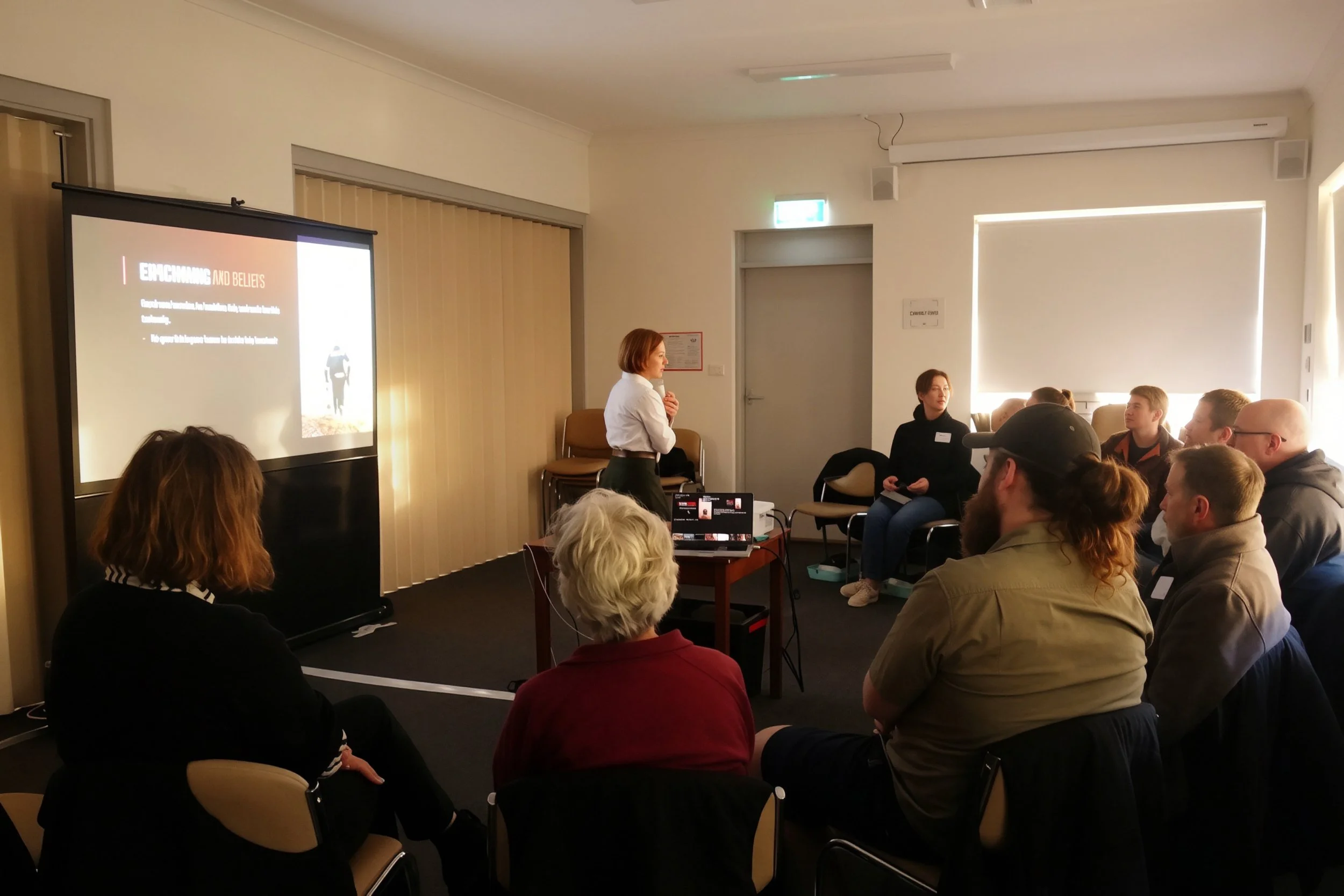
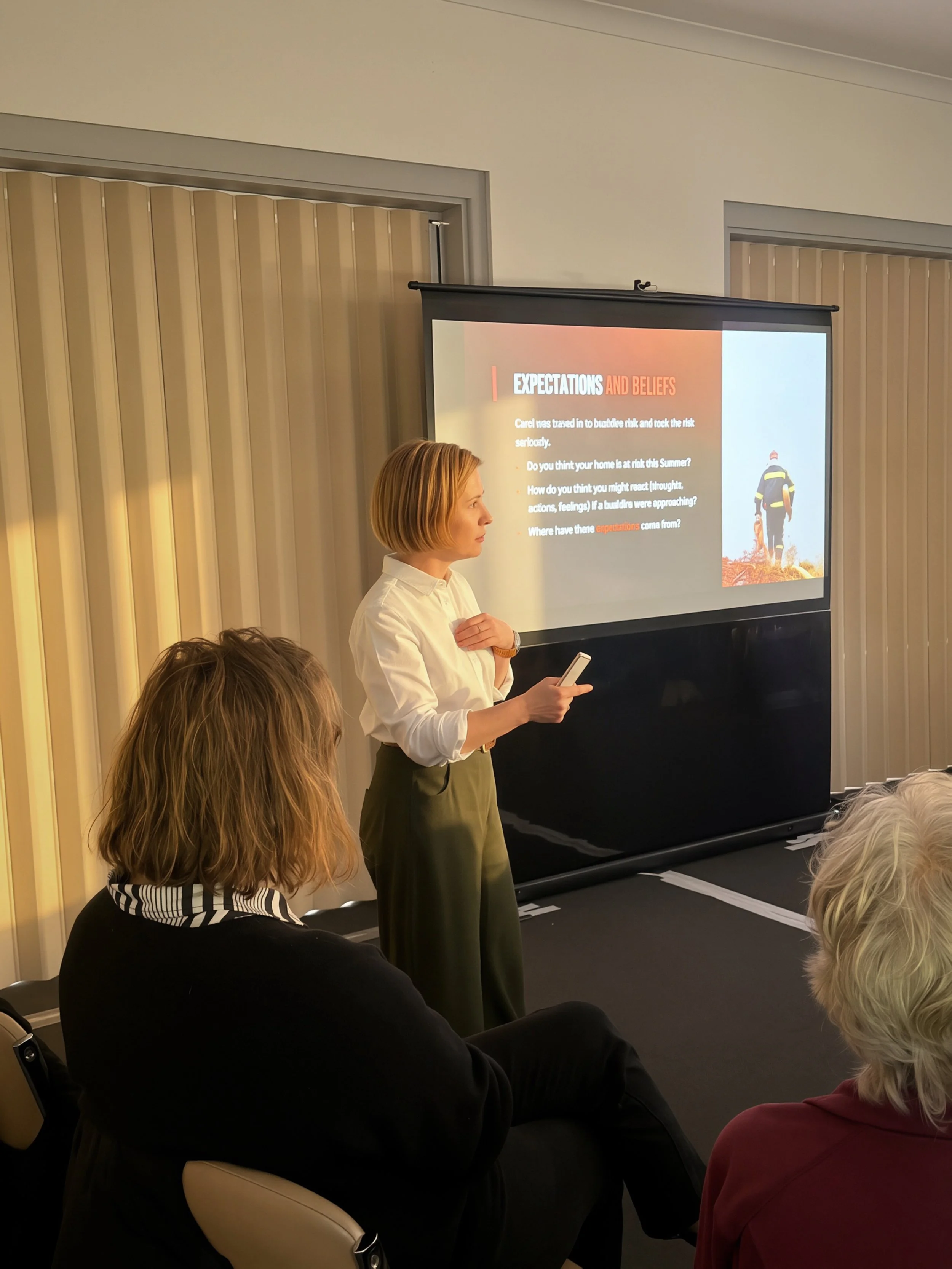
Hazen, a former student of renowned disaster psychologist Dr Rob Gordon, has done extraordinary work bringing people together to strengthen community understanding of emotional preparedness. Her commitment to sharing information, building connections and helping neighbours prepare for emergencies is exactly the kind of local leadership that makes communities stronger.
She's also developed a fantastic collection of resources, which we highly recommend exploring. In particular, her emotional preparedness checklist is well worth a look: check out Hazen’s work online here.
As we welcomed participants into the workshop, we were delighted to discover that next door, Deb and the Brown Hill line dancing group were in full swing. Having delivered our final 2025 pilot workshop in Heathcote alongside the Zumba Gold group, it seems we're developing something of a tradition of pairing emotional preparedness with a healthy dose of dancing. From Zumba to boot scootin' in Brown Hill. Who knows what's next?
The IBE participants brought a remarkable diversity of backgrounds, experiences and perspectives.
Some participants had invested enormous thought and energy into preparing for bushfire. A special mention goes to Maree Grenfell, whose preparedness planning (complete with Excel spreadsheet!) was truly impressive. It was also wonderful to have Maree as an experienced disaster resilience practitioner in the room, contributing expertise and thoughtful observations to the discussion.
Others arrived knowing they probably needed to do more. When we asked how many people had written bushfire survival plans, just two hands went up. As the workshop progressed, the lightbulb moments began.
Participants reflected on the importance of having a written plan, practising it with everyone involved, and preparing alternative plans for when circumstances change. Because circumstances will change.
What happens when one member of the household wants to leave early and another wants to stay? How do you account for a partner's mobility limitations, medical needs or essential medications? What happens when someone who is normally capable and independent becomes overwhelmed by an emergency?
And, of course, what about the pets?
As we've discovered time and again, conversations about animals can be among the most emotional of all. For many people, pets are family members, and decisions about their safety can profoundly influence how and when people respond to bushfire risk.
These are not abstract questions. They are the practical, deeply human realities that shape decision-making under pressure.
And they are precisely why we believe communities benefit from having these conversations before a fire threatens.
One of the strongest themes to emerge from our two workshops this week was the extraordinary importance of community leadership.
It's something that Professor Daniel Aldrich and his colleagues have explored in their research on disaster resilience. A 2025 study examining the relationship between social infrastructure and social capital found that community spaces help build and maintain the relationships, trust and networks that people draw upon when disasters strike.
In other words, the places where people gather, learn, dance, volunteer and get to know their neighbours are much more than buildings.
They're part of the infrastructure that helps communities survive and recover.
And people like Hazen and the many community leaders we've met throughout our travels are the human connections that bring that infrastructure to life.
Community leaders really can be lifesavers.
Of course, we'd be remiss not to mention the other rather memorable feature of Thursday's workshop: the technology. With 12 participants, each requiring a VR headset, headphones and controller, that's 36 separate pieces of hardware with the potential to misbehave.
And misbehave they did!
Despite our meticulous preparation, Brown Hill presented us with more than our fair share of technical challenges. Fortunately, we had the wonderful Rebecca Wilde stepping into the role of workshop assistant. Bec's calm, capable support, combined with the affable good humour and extraordinary patience of our participants, meant we successfully delivered the virtual reality experience.
Without a hitch.
Well, perhaps one or two hitches.
A huge thank you to Bec for making everything work, and to our participants for reminding us that a little humour and understanding can go a very long way.
We were also fortunate to have Vanessa Ibrahim capturing participant testimonials and reflections throughout the morning. Hearing people describe the experience in their own words is invaluable, both for our ongoing learning and for helping future communities understand what IBE offers.
The two days in St Andrews and Brown Hill have reinforced something important for our team.
We've demonstrated that the IBE model works. Now we need to invest in the systems, equipment and people that will allow us to deliver it sustainably and at scale.
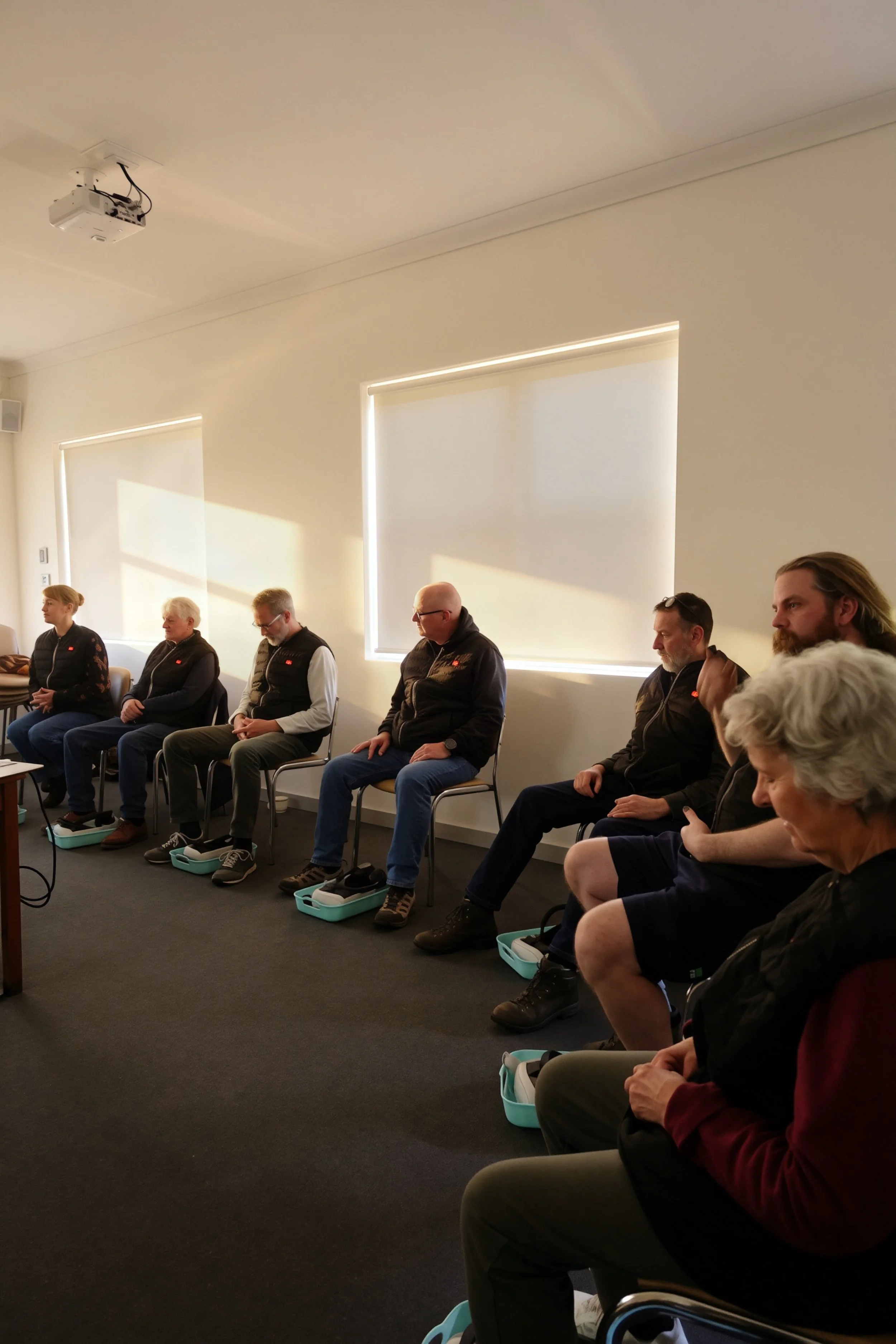
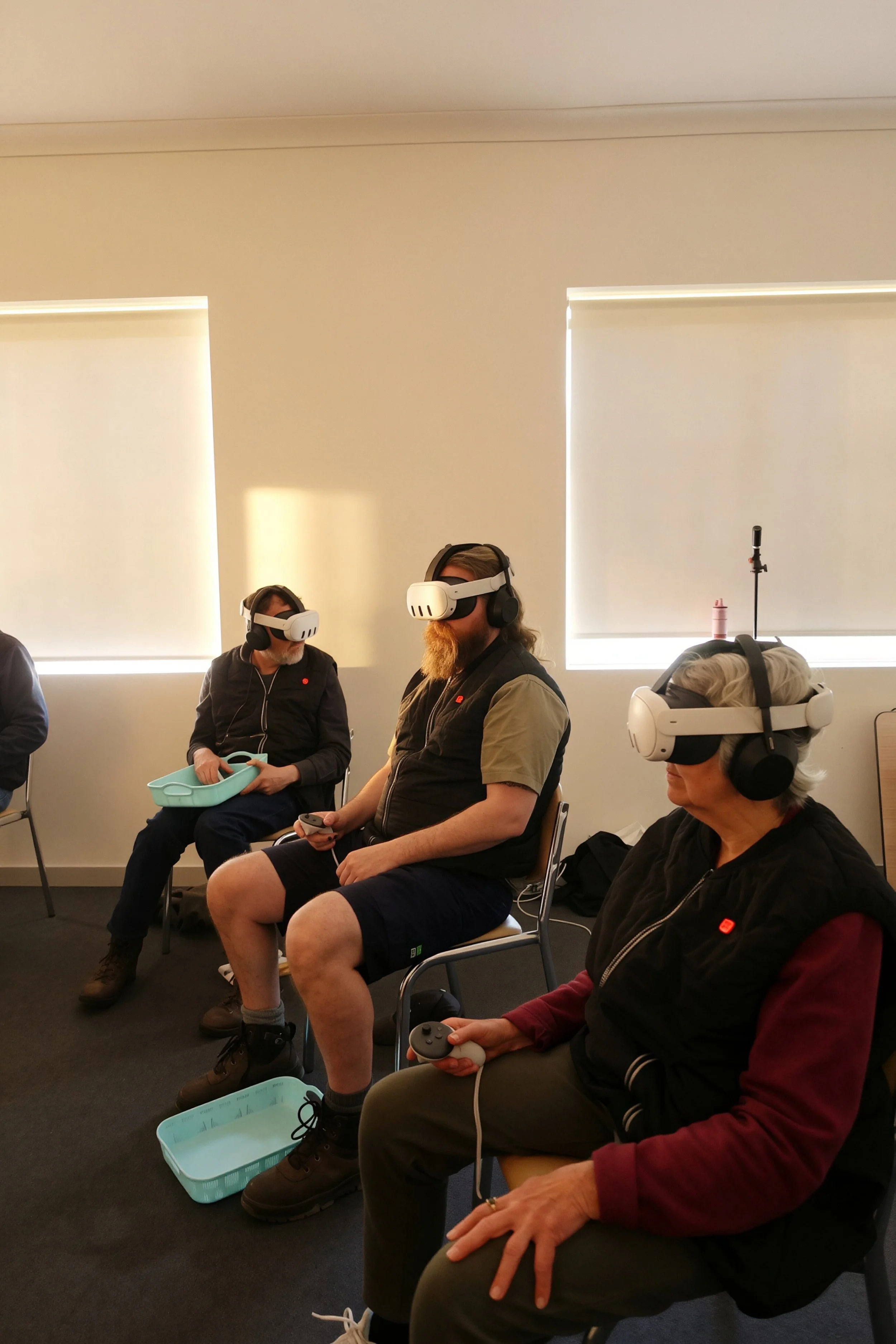
Our priorities include a centrally managed VR system that reduces the technical burden on participants and facilitators, dedicated workshop assistants, and a Community Engagement Coordinator who can work alongside local hosts to bring communities together.
And while we're putting together our wish list, a van to transport our growing collection of equipment would be rather wonderful too!
For the remainder of 2026, we'll be focusing on our funding strategy and building relationships with government, philanthropic and corporate partners who share our belief that emotional preparedness deserves a place alongside physical bushfire preparedness.
If you know an organisation interested in supporting this work — or a company with a spare van looking for a very good home — we'd love to hear from you.
Thanks, Hazen, for your exemplary ability to draw people together. Thanks Jo from local Brown Hill Jo’s Catering for the delicious pies, quiches, salad and chips.
But most importantly, thank you to everyone in Brown Hill who joined us: for your generosity, thoughtful questions, practical wisdom, patience with the technology and willingness to share your stories.
And to Deb and the line dancers: thanks for the soundtrack!
